Disclaimer: I do not have any formal training in Economics. My level of understanding of modern economics is limited at High School AP Economics, combined with reading bits and pieces from here and there. So bear with me as I layperson-explain.
The orthodox theories of economics of today have a giant problem of implementation. Namely, most politicians do not have the discipline, or understanding, or capability, to correctly carry out the ideas of economic theories and use them as intended. While most would find the general idea agreeable by the spirit of “politicians, amirite” sort of populism, it is worth looking beyond the surface of the claim, and examine some of the instances of just what was missed. Come with me on this journey, because the rabbit hole is much deeper than I thought.
Now, coming from the left side of the political spectrum, when you hear the name “Milton Friedman”, your first reaction might be dismissiveness. I know I was dismissive of his ideas for a long time. We all thought that Reagan and Thatcher borrowed his ideas and shaped the Neoliberal policies of “balance the books, cut the taxes, let the money trickle down and economic prosperity will follow”. It doesn’t take a genius to see how spectacularly Neoliberalism has been failing in the Western World. As a result, we seem to think, “let’s point our fingers at Milton Friedman then”, because presumably this is what Friedman led to. This cuts deep, especially from those impoverished by the growing income inequality and wealth gap, as a result of the policies instituted from the 1980s onwards. I don’t blame you for thinking this way; I did too, until very recently.
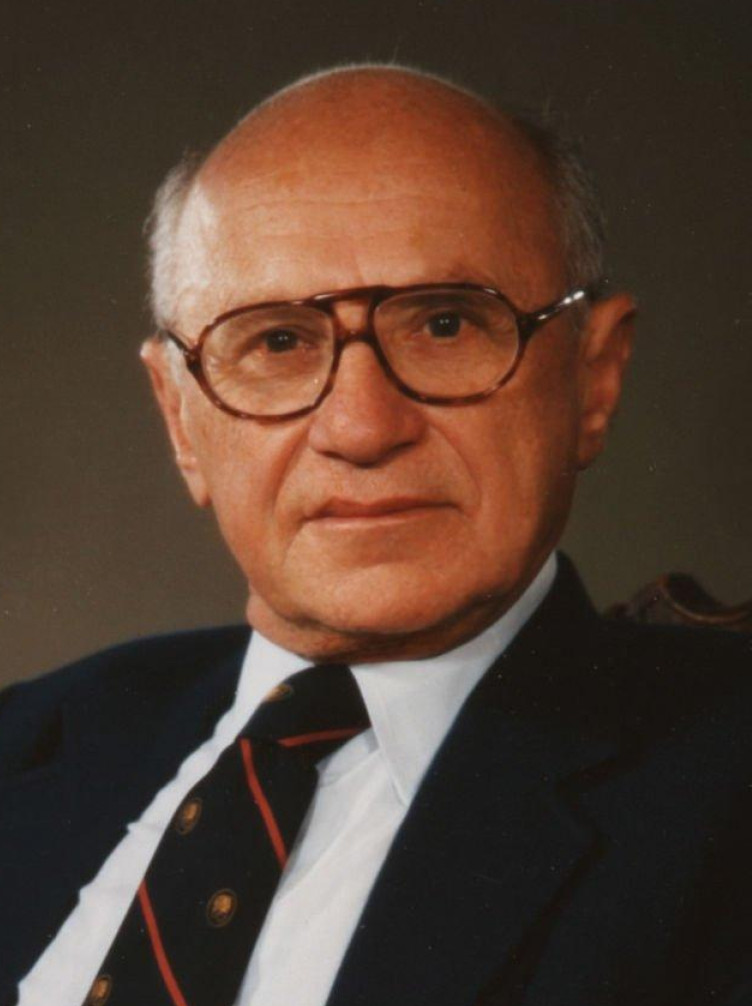
The Defense
Hear me out.
Milton Friedman’s ideas are not wholly infallible, to start with. Some of his ideas had destructive consequences too. For example, many would argue that Monetarism and Deregulation caused the Great Recession of 2007-08, and I would agree. Some will recall that Friedman argued that the sole responsibility of corporations is to generate profit, without directly accounting for societal responsibility. That idea had enormous destructive consequences in our society in ways like Climate Change. I would not defend these ideas. I don’t think you should either.
However, when it comes to the widening inequality associated with Neoliberalism, I am more inclined to come to Friedman’s defense.
Now, your perception of Milton Friedman on welfare and inequality may vary. I used to believe that Friedman thought “free market competition would simply benefit the consumer by way of competition” or “he simply did not account for inequality”. Both views are not wholly accurate; with the latter particularly unfair. It seems intellectually unthinkable to assume that a renowned economist simply overlooked one of economics’ most basic questions.
If we carefully examine the 1962 Capitalism and Freedom book, even on the surface, you will note that Friedman had in fact proposed solutions in his terms, and it is a far cry from our preconceived notions. In fact, some of our “Leftist” ideas owes some credit to Friedman.
At a cursory glance, one might conclude that Friedman led a crusade against welfare programs such as Social Security. Some may come to understand that he had issues with the inefficiencies of these means-tested programs. However, few remembers that Friedman had alternative proposals of combatting poverty in the chapter immediately after.
In the Chapter Alleviation of Poverty, Friedman would outline a Negative Income Tax, which is generalized as “the poor don’t pay taxes and get handout money”.
Yes, you heard that right, Milton Friedman is pro-handout.
While you hold your gasp, this is not a one-off occurence either, as Friedman is also an early proponent of “Helicopter Money”, which is to say, “airdrop money to households to boost spending”. Evidently, what Friedman was pushing back on was not-so-much “society should not have redistribution”, but rather, the means of which welfare is carried out. What Friedman took issue with is the inefficiencies and loopholes in the bureaucracies that came with means-testing, in programs like Social Security or Progressive Taxation. You may disagree with his assessment on welfare programs, but you should not write him off. In fact, when we look at the current day “Leftist” proposals like UBI, or more generally, universal redistribution programs instead of means-tested programs, we can trace those ideas to him.
The Betrayal
Now, assuming you have not been living under a rock for the last however many years, you don’t remember anything remotely like that being implemented by the Governments of the Western World. Me neither. In fact, UBI only very recently picked up steam, when it should have been a prominent idea a long time ago. Had we faithfully carried out Friedman’s version of Neoliberalism, you would not be worrying about the deductions on your tax return forms; you might at least be arguing over a simpler and more transparent tax structure, rather than watching loopholes for the 1% swallow the system whole (Friedman proposed a Flat Tax system); some of you would be looking forward to yearly negative tax rebates. While this is likely no paradise, it is a far cry from the “cut taxes for the rich” regime of the Neoliberal crowd that left us waiting for the money to trickle down.
So 64 years on, what happened? I contend that the lion share of responsibility does not lie with Friedman. But rather, politicians like Reagan and Thatcher cherry-picked the part about gutting welfare and ran with it, and left the Negative Income Tax waiting by the wayside. It is a travesty how we come to generalize Friedman into “lower taxes better”.
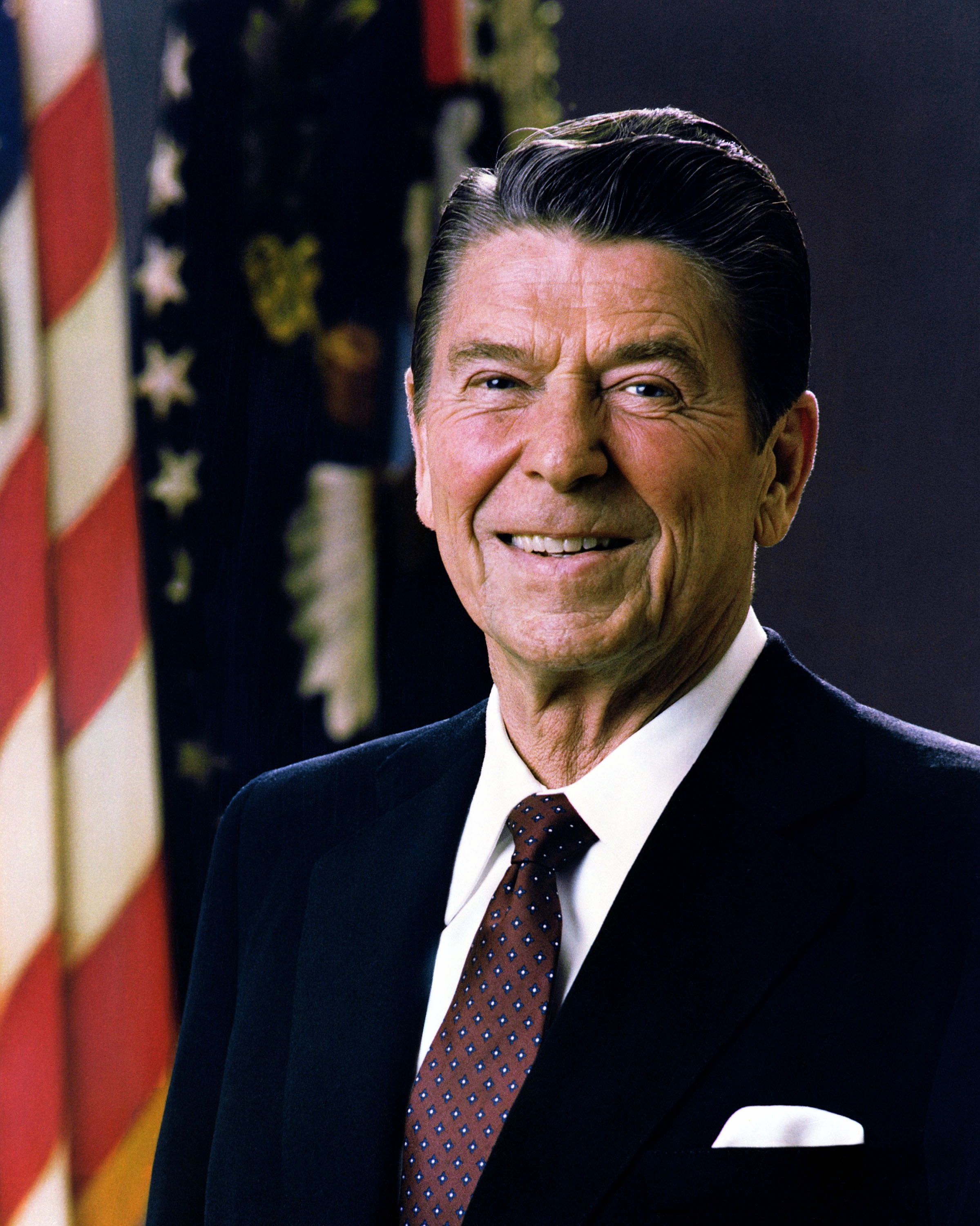
In fairness, this is what we should have anticipated. It’s not as if the politicians of the Bretton Woods Era understood what “counter-cyclic spending” meant, and chose to interpret it as a “carte blanche to borrow money”, since “the leading economic theory said so”. I doubt any of them had even read the book. (I know I didn’t.)
So perhaps it should not have came as a surprise that the same politicians would come talking in pretty language like “Individual Liberty” or “Economic Freedom” while defiling Monetarism on her altar, bastardizing her into a gorgonic monster that petrifies the poor.
This, I would argue, is the important lesson for the economists and leaders of today. Quite a depressing affair, isn’t it? I don’t know if we should start telling economists that they need to write their seminal works like they are explaining to 5-year-olds. Or to hire security analysts on their ideas in anticipation of perversion. I hate that this has to be said. I’d wager $20 that Milton Friedman would be turning in his grave right now, if he had seen the state of affairs in our world right now.
– 星見紅楓 (Hoshimi557)
Last modified on 2026-04-30